Hey everyone, it’s your favorite Lumia Island survivor, here to dive deep into what’s shaking up our favorite arena! If you’re anything like me, you’ve been on the edge of your seat, eagerly anticipating how Eternal Return keeps our battles fresh and unpredictable.
It’s no secret that Nimble Neuron consistently revamps Lumia, and this latest update is a massive game-changer for how we strategize, fight, and ultimately, survive.
I’ve personally spent countless hours exploring every nook and cranny, and I can tell you, the days of predictable routes are well and truly over. Forget just “new maps” in the traditional sense; Eternal Return’s magic lies in its continuous evolution of Lumia Island itself.
We’re not just getting minor tweaks; we’re talking about significant overhauls to familiar territories, introducing fresh pathways, strategic hot zones, and wild new objectives that completely reshape the flow of every match.
I’ve noticed how these changes instantly shift the meta, forcing everyone—from seasoned veterans to fresh recruits—to adapt their favorite character builds and team compositions.
This kind of dynamic environment keeps the game exciting, ensuring that every drop onto Lumia feels like a brand new challenge. It’s truly a testament to the developers’ commitment to innovation, always pushing the boundaries of what a battle royale can be.
So, are you ready to uncover the secrets of the latest transformations? Grab your gear, because you won’t want to miss a single detail. We’re about to unpack all the fresh insights, critical adjustments, and clever tactics you’ll need to dominate the ever-evolving battlegrounds.
Let’s truly break down what’s coming to Lumia Island and how you can use it to your advantage. Below, we’re going to precisely explore these updates and ensure you’re fully equipped to conquer the new challenges!
Unraveling the New Lay of the Land
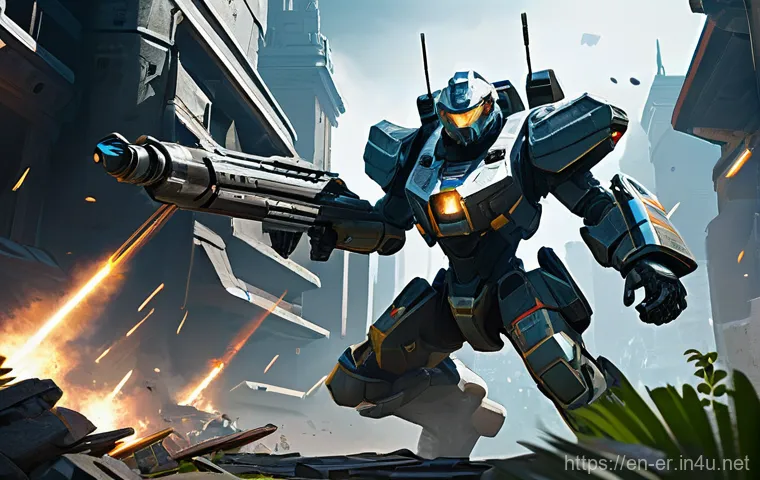
The moment I first dropped into the updated Lumia Island, I immediately felt a shift in the air. This wasn’t just a fresh coat of paint; it was a complete architectural redesign that truly forces us all to re-evaluate our initial routes and favorite starting zones.
I’ve always been one to stick to my comfort picks, but after a few rounds, I realized those predictable paths I once relied on are now either gone or lead to entirely new challenges.
It’s wild how Nimble Neuron keeps us on our toes! For instance, certain areas that used to be a mad dash for early resources are now more spread out, encouraging a wider initial distribution of players, which, if you ask me, makes for much more dynamic early-game skirmishes.
I’ve personally found myself encountering opponents in spots I never expected, leading to some truly memorable and chaotic early fights. This constant evolution is what makes Eternal Return so compelling, preventing the game from ever feeling stale.
It’s like the island itself is alive, constantly shifting and breathing, demanding that we, as survivors, adapt or be left behind. I’ve spent hours just walking around, trying to commit these new layouts to memory, and honestly, it’s a delightful challenge.
The verticality in some of the revamped zones has also opened up exciting new avenues for flanking and escape, completely changing how I approach engagements.
Coastal Reinventions and Surprising Pathways
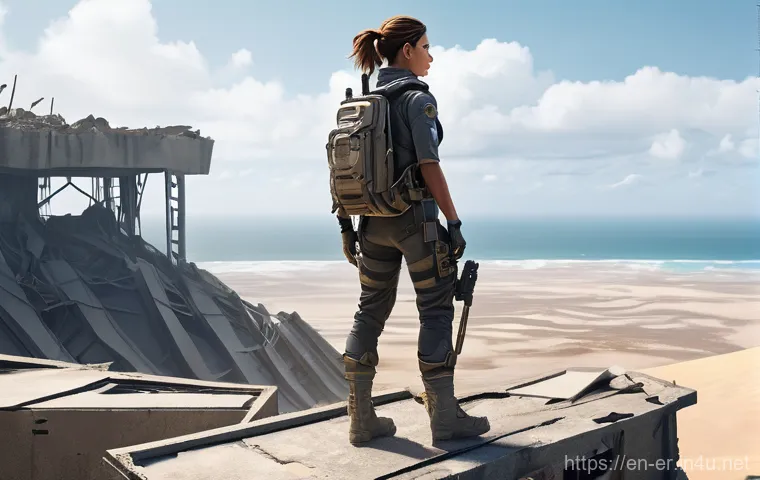
The coastal regions, in particular, have seen some truly breathtaking and strategically significant changes. What used to be straightforward stretches of beach or predictable choke points are now intricate networks of broken-down structures, new elevation changes, and unexpected nooks perfect for ambushes.
I remember one specific game where I was chasing an opponent through what I thought was a familiar path near the beach, only to find a newly collapsed building offering a direct, albeit risky, shortcut to their escape route.
It caught me completely off guard, and honestly, I loved it! This kind of dynamic pathing means that simply memorizing the map isn’t enough anymore; you need to understand the flow and the potential for these new diversions.
My teammates and I have spent countless custom games just exploring these areas, discovering new rotations and places to hide or initiate fights. It’s truly a testament to how much thought went into making these zones feel fresh and impactful.
The developers haven’t just moved a few bushes; they’ve fundamentally altered how we navigate and interact with these once-familiar boundaries of Lumia.
The feeling of discovering a new escape route mid-fight is exhilarating!
Central Island Crossroads: More Than Just a Hub
The central areas of Lumia have always been a hotbed of activity, but now, they feel like an entirely different beast. The previous straightforward access points have been complicated by new rubble, rearranged barricades, and even some additional environmental hazards that you wouldn’t have seen before.
I’ve found that what used to be a quick dash through the center now requires a lot more awareness, as vision lines have been broken up, and new blind spots have emerged.
This isn’t a bad thing at all; in fact, it amplifies the importance of proper scouting and communication with your team. I personally felt a moment of panic in my first few games trying to rotate through the newly designed central areas, but after a few tries, I started to appreciate the depth it added.
It’s like a mini-game of cat and mouse within the larger match, where knowing these new intricacies can give you a significant edge in escaping ganks or setting up devastating ambushes.
The way they’ve woven in new cover points and even some destructible environmental elements truly makes every passage through the center a high-stakes decision.
Strategic Hotspots and Objective Overhauls
Beyond just the visual changes, the very pulse of Lumia Island has been rewired through significant objective overhauls. This is where the real mind games begin, as the placement and mechanics of crucial objectives like Alpha, Omega, and especially the newly introduced wild animals, have undergone a massive transformation.
I’ve always preached the importance of objective control, but now, it’s not just about being there first; it’s about understanding the nuances of how these objectives interact with the changed terrain and the new flow of the game.
For example, the routes to Alpha and Omega feel riskier and more contested than ever, often drawing teams into brutal skirmishes in unexpected corners of the map.
It’s a thrill, honestly, because it means no two games feel quite the same, even if you try to follow a similar strategy. My personal experience has been that teams that adapt quickly to these new objective timings and locations are the ones who consistently climb the ranks.
It’s a game of chess, but on a constantly shifting board, and I wouldn’t have it any other way. The developers clearly want us to think on our feet, and they’ve succeeded spectacularly.
Alpha/Omega Spawns: High Stakes, New Angles
The spawning mechanics and surrounding terrain for Alpha and Omega have been completely re-evaluated, making them even more pivotal battlegrounds. What I’ve personally observed is that the approach vectors to these objectives are now far more numerous and often lead through newly dangerous chokepoints or open areas that demand careful planning.
Forget simply walking up and taking them; you often have to clear surrounding areas or engage in a preliminary skirmish just to get a good position. I’ve been caught off guard more times than I care to admit by enemy teams rotating from a completely unexpected direction because a new pathway opened up.
This has significantly raised the stakes for contesting these power objectives, forcing teams to commit more resources and thought into their engages.
It’s exhilarating, knowing that a single Alpha fight can swing the entire game, and now, with these new layouts, every engagement around them feels even more impactful.
The visual cues for their arrival also feel more integrated into the overall map design, drawing your attention naturally without feeling forced.
New Wild Animal Behavior and Strategic Farm
The changes to wild animals are subtle but incredibly impactful for early-to-mid game progression. It’s not just about where they spawn anymore, but how they path, and crucially, how they’re grouped.
I’ve noticed certain animal packs now inhabit areas that were previously empty, providing new opportunities for early mastery levels or unexpected encounters.
This has significantly altered my initial farming routes; what once was an efficient loop might now lead me into a dead end or a surprisingly difficult fight.
Moreover, some higher-tier animals seem to have more varied patrol routes, which means you can’t always rely on them being in the exact same spot. This adds a layer of unpredictability that I actually really appreciate because it means you have to stay vigilant and scout more proactively.
It’s no longer just a race to clear camps; it’s about adapting your farming strategy on the fly based on what you encounter. For teams, this means having to communicate more about contested animal zones and potential invasions, which just adds to the overall strategic depth.
Crafting Your Build for the Evolving Meta
If you’re anything like me, you’ve probably got a few go-to builds that you rely on for your favorite characters. Well, get ready to shake things up, because the latest changes to Lumia Island are throwing our tried-and-true item routes and character choices into a delightful state of chaos!
I’ve always been a creature of habit when it comes to my early game item progression, but these new map layouts and resource distributions mean that what was once a perfectly optimized path for a crucial item might now be slower, riskier, or even completely unviable.
It’s both frustrating and incredibly exciting, forcing me to rethink everything from my starting weapon to my final core items. I’ve personally spent hours in practice mode just experimenting with different routes and seeing how they feel.
This isn’t just about new map knowledge; it’s about re-learning your character in the context of a dynamically changing environment. The meta is shifting faster than ever, and those who are willing to adapt their builds and experiment with new itemization strategies are the ones who are truly going to thrive.
It’s like the developers gave us a whole new puzzle to solve, and I’m totally here for it.
Item Route Adjustments: More Than Just a Detour
The most immediate impact I felt as a player was on my item routes. Seriously, my brain felt scrambled for a few games! Zones that were once rich in specific materials might now be barren, or conversely, areas I used to skip are now brimming with crucial components.
This isn’t just a minor inconvenience; it fundamentally alters the early game for every character. For instance, a character that relied heavily on early access to a specific material in the Pond might now find that material more readily available in the Archery Range, forcing a completely different initial rotation.
I’ve been meticulously updating my in-game saved routes, and it’s a constant process of trial and error. My advice? Don’t be afraid to experiment, even if it feels clunky at first.
What might seem like an inefficient detour could actually be the fastest way to get your core items online. This dynamic forces us to be more flexible and less reliant on muscle memory, which, while challenging, ultimately makes us better players.
Strategic Teleportation Usage in a New Era
With the map feeling so different, the strategic value of teleportation has escalated dramatically. It’s no longer just a quick way to get across the map; it’s a critical tool for navigating dangerous zones, escaping ganks, and even setting up surprise ambushes.
I’ve personally found myself using teleporters in ways I never considered before, especially when trying to secure objectives or link up with separated teammates.
The placement of some of the new zones means that certain teleporters now offer unique advantages, providing quick access to high-value areas that were previously hard to reach.
Understanding these new teleporter synergies is absolutely crucial. Are you using a teleporter to cut off an enemy’s escape? Or perhaps to quickly back up a teammate who’s outnumbered?
The possibilities feel endless, and mastering these new rotations can be a huge game-changer in those crucial late-game moments. It’s about leveraging these fixed points of mobility in an ever-changing landscape to gain a decisive advantage.
The Economic Impact: Resources and Loot Paths
Let’s talk brass tacks: how these changes are hitting our pockets, or rather, our inventories. The economic balance of Lumia Island has always been a delicate dance between farming, crafting, and fighting, but with this update, that dance has a whole new rhythm.
I’ve been paying close attention to how resource distribution affects my gold income and item progression, and let me tell you, it’s a significant shift.
Areas that were once predictable gold mines for crafting materials might now be contested hotspots, while quieter zones might offer surprisingly rich pickings.
This forces a constant re-evaluation of your farming priorities and even your choice of starting character based on their early game material needs. I’ve personally seen games where teams that adapted their resource routes early on snowball into unstoppable forces simply because they found a more efficient way to gather what they needed.
It’s not just about collecting; it’s about strategic collection, understanding which items are now more accessible and which are tougher to come by.
Loot Distribution Changes and Item Accessibility
The actual distribution of loot has seen some fascinating alterations. Specific item components, like certain raw materials or even food ingredients, appear in different quantities or in entirely new zones.
This directly impacts the viability of certain build paths and can even dictate early game strategies. I’ve been experimenting with characters who traditionally struggle with early item completion, and I’ve found that some now have surprisingly smoother routes due to these loot changes.
Conversely, a once-dominant early game character might find their optimal path has been nerfed by fewer key material spawns. This means you have to be more flexible with your crafting.
Sometimes, adapting to what the island gives you, rather than stubbornly sticking to a pre-planned route, is the key to success. My personal recommendation?
Jump into some matches with a fresh perspective and see what items are popping up where. You might discover a hidden gem of a route that nobody else has thought of yet.
Farm Efficiency in the New Landscape
Optimizing your farm efficiency is more critical than ever, especially with the altered layout and resource availability. What I’ve found is that players who can quickly identify and adapt to the most efficient routes for their specific character and build are gaining a significant edge.
It’s not just about clearing camps; it’s about connecting those camps with crafting points and transition zones in a way that minimizes downtime and maximizes material acquisition.
I’ve personally tested several new farming loops, looking for the sweet spot between safety and speed. This often means being willing to venture into less familiar territory if the payoff is there.
The risk-reward calculation for farming has definitely changed, making early game decisions far more impactful. This also extends to how you approach contesting enemy farms – knowing their likely routes can set you up for perfect ambushes.
Mastering the New Combat Dynamics
Okay, let’s get down to the nitty-gritty: how these map changes actually impact our brawls on Lumia. For me, combat in Eternal Return has always been about understanding angles, cover, and when to commit or disengage.
With this massive update, those principles are still true, but they’re playing out on an entirely new stage. I’ve noticed a huge shift in how team fights unfold, how solo players maneuver, and even how duels are initiated.
What once felt like a straightforward engagement can now spiral into a chaotic, multi-level skirmish thanks to new terrain features. It truly keeps you on your toes, demanding quicker reactions and a deeper understanding of environmental advantages.
I’ve personally had some epic moments where I’ve used a newly added wall or a raised platform to completely turn the tide of a fight. It’s incredibly satisfying when you pull it off, and it makes every combat encounter feel fresh and unpredictable.
The days of fighting in open, predictable spaces are largely gone, replaced by a more tactical, dynamic battlefield.
Terrain Advantage: Your New Best Friend (or Worst Enemy)
The new terrain features are, without a doubt, a game-changer for combat. We’re talking about more elevated positions, new areas of high ground, and plenty of additional cover points that weren’t there before.
This means that simply having better gear isn’t always enough anymore; understanding how to leverage the environment to your advantage can be the deciding factor in a fight.
I’ve personally been caught out by opponents ambushing me from a newly accessible high ground, and I’ve also had incredible success using new pieces of cover to reposition and re-engage.
It’s like the island itself is an additional character in every fight. This significantly raises the skill ceiling for positioning and micro-play, rewarding players who can quickly assess their surroundings and adapt their strategy on the fly.
Don’t underestimate the power of a well-placed wall or a unexpected drop-off!
Teamfight Positioning: A New Chess Game
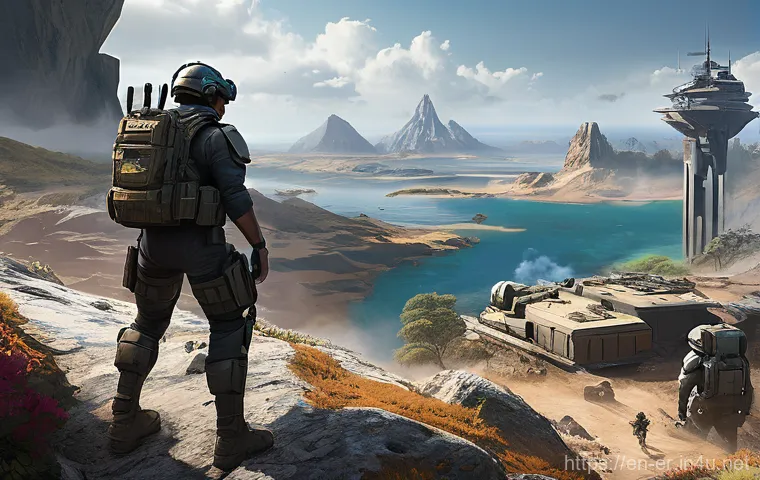
For team players like myself, the changes to the map have completely redefined how we approach team fights. What were once clear engagement zones are now fragmented by new obstacles and pathways, meaning that traditional frontline-backline formations might need to be adjusted.
I’ve noticed that successful teams are those who can quickly adapt their positioning based on the immediate terrain, utilizing new choke points for area-of-effect abilities or new open spaces for flanking maneuvers.
It’s no longer about just clumping up; it’s about spreading out intelligently, using the environment to create angles of attack or to isolate enemy carries.
My team and I have spent countless hours just discussing how to best approach fights in these new areas, and honestly, it’s a blast. It adds so much more strategic depth to what was already a fantastic game, turning every major team engagement into a thrilling, unpredictable chess match.
The Community’s Pulse: What Players Are Saying
It’s always fascinating to see how the wider Eternal Return community reacts to such massive updates, and honestly, the buzz around these map changes has been electrifying!
From forums to Discord servers, everyone is talking about their favorite new spots, their most frustrating ambushes, and their wild theories about the shifting meta.
I’ve been actively engaging with other players, sharing my own experiences, and soaking up all the collective wisdom. What I’ve found is a mix of excitement, a little bit of learning curve frustration (which is totally normal!), and a whole lot of creative strategizing.
It truly feels like a collective effort to uncover all the secrets of this revamped Lumia. There’s a palpable energy of discovery, with players eagerly sharing optimal routes, clever hiding spots, and unexpected character synergies that have emerged from the new environment.
It’s this kind of dynamic community interaction that makes being part of Eternal Return so incredibly rewarding. It shows that Nimble Neuron isn’t just developing a game; they’re cultivating a vibrant, adaptive ecosystem.
Player Feedback: A Symphony of Adaptability
The feedback from players has been a fascinating journey. Initially, there was a natural period of adjustment, with many expressing that they felt a little lost or had to unlearn old habits.
I personally felt that too, so it’s completely understandable! But what’s truly inspiring is how quickly the community has started to adapt and innovate.
I’ve seen some incredible discussions about new optimal routes, surprising character power spikes in specific zones, and ingenious ways to exploit the new terrain.
It’s a testament to the player base’s dedication and creativity. This collective problem-solving is what makes the Eternal Return community so special, constantly pushing the boundaries of what’s possible within the game.
It shows that even with significant changes, the passion for discovery and mastery shines through.
My Personal Takeaways and Future Outlook
After immersing myself in countless games and countless hours of exploration, my personal takeaway is overwhelmingly positive. Yes, there was a learning curve, and yes, I had to completely re-evaluate some of my ingrained habits.
But that’s the beauty of Eternal Return, isn’t it? It never lets you get too comfortable. This update isn’t just about new content; it’s about a renewed sense of challenge, discovery, and strategic depth.
I genuinely feel like the game has been reinvigorated, and every drop onto Lumia Island now feels like a genuinely fresh adventure. Looking ahead, I’m incredibly excited to see how these changes continue to shape the meta, how new strategies emerge, and what other surprises Nimble Neuron has in store for us.
It keeps the game vibrant, and as a loyal survivor, I wouldn’t want it any other way. This continuous evolution is why Eternal Return remains one of the most compelling battle royales out there.
| Update Category | Impact on Gameplay | Strategic Consideration |
|---|---|---|
| Map Layout Changes | Alters movement, pathing, and encounter zones. | Rethink existing routes, adapt to new flanking opportunities. |
| Objective Adjustments | Shifts high-priority fight locations and timings. | Prioritize contested objectives, coordinate team rotations. |
| Resource Distribution | Changes availability of crafting materials and early items. | Adjust item build paths, explore new farming efficiencies. |
| Combat Dynamics | Introduces new cover, elevation, and engagement angles. | Master terrain advantage, adapt teamfight positioning. |
| Overall Meta Shift | Encourages character and item build flexibility. | Experiment with new character/build combos, stay updated on community findings. |
Evolving Character Roles in a Dynamic World
With such sweeping changes to Lumia Island, it’s only natural that our beloved characters, and more importantly, their roles within a team, would feel the ripple effect.
What I’ve keenly observed is that some characters who might have been niche picks are now shining brightly, while others might need a slight adjustment to their playstyle to remain competitive.
This isn’t a nerf or a buff in the traditional sense; it’s an organic evolution driven by the environment itself. I’ve personally found myself revisiting characters I hadn’t touched in a while, only to discover that the new map perfectly complements their kit or opens up entirely new opportunities for them.
It’s incredibly satisfying when you realize a character’s full potential because of how they interact with the revamped terrain. This kind of dynamic balancing, where the map itself influences meta shifts, is a testament to the intricate design philosophy behind Eternal Return.
It ensures that the roster always feels fresh and that new strategies are constantly emerging, keeping the game exciting for both veterans and newcomers alike.
Ranged vs. Melee: New Skirmish Dynamics
The interplay between ranged and melee characters has taken on a fascinating new dimension with these map changes. Areas with more cover and tighter corridors often favor melee characters who can quickly close the gap and lock down targets, while open spaces with new high ground might give ranged characters a significant advantage for poking and zone control.
I’ve personally experienced moments where a well-placed melee character could completely nullify a ranged threat in a newly constricted area, and conversely, seen ranged characters dominate from a new perch.
This means that team compositions now have to consider these environmental factors even more heavily. It’s not just about having a balanced team; it’s about having a team that can adapt to the varying terrain of each engagement.
This dynamic keeps fights incredibly fresh, as what works in one part of the map might be a disaster in another.
Support and Utility Characters: The Unsung Heroes
For too long, I feel like support and utility characters have been somewhat undervalued in the solo queue, but with these latest updates, their importance has skyrocketed.
Vision control, in particular, has become paramount due to the increased number of flanking routes and hiding spots. Characters with strong vision-granting abilities or disengage tools are proving invaluable in navigating the more complex terrain.
I’ve personally found myself relying heavily on my support teammates to scout out dangerous new areas or to provide crucial crowd control in unexpected ambushes.
Their ability to control the flow of information and to manipulate enemy positioning is now more critical than ever. This shift is fantastic because it highlights the strategic depth of the game and rewards players who excel in these often-overlooked roles.
It’s a great time to be a support main, believe me!
Navigating the Meta: Tips for Dominating Lumia
Alright, my fellow survivors, you’ve heard all about the changes, but how do you actually put this knowledge into practice and dominate the newly shaped Lumia Island?
This is where the real work begins, and I’m here to share some of my hard-earned wisdom and practical tips for navigating this dynamic new meta. It’s not enough to just know the map; you need to understand *how* to use it to your advantage, to predict your opponents, and to adapt your strategy on the fly.
I’ve personally spent countless frustrating and exhilarating games trying to crack the code, and while it’s an ongoing process, I’ve picked up a few crucial insights that I believe will give you a significant edge.
The key is continuous learning and a willingness to step outside your comfort zone, because the old ways might not always be the best ways anymore. This constant evolution is what makes Eternal Return so incredibly rewarding and keeps us coming back for more.
Early Game Dominance: Seizing the Advantage
The early game on the revamped Lumia Island is more crucial than ever. With altered resource spawns and new pathways, securing your initial items and getting a good head start can snowball into an insurmountable lead.
My personal strategy now focuses heavily on quickly identifying the most efficient, and crucially, safest, path to my first core items. This often means being flexible with my initial zone choices and being prepared to pivot if an area is too contested.
Don’t be afraid to adjust your route on the fly if you see opponents heading to your preferred spot; having a backup plan is vital. I’ve also found that early aggression, when properly executed using the new terrain for ambushes, can yield massive dividends by denying enemies their critical early materials.
It’s all about making smart decisions in those first few minutes.
Mid to Late Game Control: Objectives and Vision
As the game progresses, controlling objectives and maintaining superior vision become even more paramount. The new objective locations and their surrounding terrain make contesting them a high-stakes affair.
My team and I have placed a much stronger emphasis on early vision around Alpha and Omega, using the new cover points to our advantage for ward placement.
It’s about not just seeing the enemy, but predicting their approach routes through the newly opened or closed off paths. Furthermore, understanding which teleporters offer the quickest rotations to these objectives or to potential late-game safe zones is critical for maintaining pressure and securing wins.
I’ve seen countless games swing purely on a team’s ability to quickly rotate and secure a key objective thanks to smart vision and teleportation usage.
It’s a complex dance, but one that rewards careful planning.
Wrapping Things Up
And there you have it, my friends! Diving into the latest Lumia Island update has been nothing short of a fantastic adventure. It’s truly incredible how Nimble Neuron continues to keep us on our toes, constantly evolving the landscape and forcing us to think differently. I’ve personally felt a renewed sense of excitement with every drop, rediscovering my favorite characters and strategies in a whole new light. This isn’t just an update; it’s a complete revitalization of the Eternal Return experience, making every match feel fresh, challenging, and incredibly rewarding. If you’ve been on the fence, or even if you’re a seasoned veteran, I wholeheartedly encourage you to jump back in and explore every nook and cranny of this dynamic new world. The journey of adapting and mastering these changes is, for me, the very heart of what makes this game so compelling, and I truly believe this continuous evolution is what keeps us coming back for more, hungry for new challenges and triumphs. It’s a testament to the developers’ vision, making sure our time on Lumia is never, ever boring.
Good to Know Info
Here are a few quick takeaways and useful tips I’ve picked up during my countless hours on the revamped Lumia Island:
1. Master the New Terrain: Don’t just glance at the map. Spend some time in custom games or even a few casual matches just walking around, getting a feel for the new pathways, chokepoints, and elevated positions. Knowing these instinctively will give you a massive edge in chases, escapes, and team fights. Trust me, it pays off big time!
2. Be Flexible with Your Builds: Your old reliable item routes might not be optimal anymore. Resources have shifted, and what was once a quick path to a core item might now be a dangerous detour. Experiment with different starting zones and crafting sequences. I’ve found some surprisingly effective new routes for characters I thought I knew inside and out, simply by being open to change.
3. Prioritize Vision and Objectives: With the added complexity of the map and the altered objective spawns, vision control is more crucial than ever. Smart ward placement around Alpha, Omega, and especially new power zones can make or break your game. Knowing when and where to commit to these high-value fights, and having the vision to do so safely, is paramount to securing victories in this new meta.
4. Embrace Character Role Evolution: Some characters are naturally thriving in this new environment due to the changes in terrain and combat dynamics. Don’t be afraid to experiment with characters you haven’t played in a while, or even try new roles. Supports, in particular, feel incredibly impactful with their ability to scout and control new, intricate engagement zones. You might just discover a new main!
5. Communicate with Your Team: This is always important, but with the added layers of strategy introduced by the map changes, clear and consistent communication with your teammates is non-negotiable. Calling out enemy rotations through new paths, coordinating objective pushes, and planning ambushes using the new terrain will significantly boost your team’s success rate. It’s truly a team effort to unravel the new mysteries of Lumia.
Key Takeaways
Ultimately, what I’ve truly learned from this massive update is that adaptation is the name of the game. The developers have given us a richer, more dynamic battlefield, demanding that we constantly learn, experiment, and evolve our strategies. It’s challenging, yes, but that’s precisely what makes it so incredibly engaging and addictive. Embrace the changes, explore the new possibilities, and don’t be afraid to step outside your comfort zone. This isn’t just about playing Eternal Return; it’s about growing with it, understanding its shifting landscape, and finding new ways to outsmart your opponents. The meta is wide open, and the players who are willing to dive deep, ask questions, and rethink their approach are the ones who will truly shine. So, go forth, brave survivors, and carve out your legend on this vibrant, ever-changing Lumia Island!
Frequently Asked Questions (FAQ) 📖
Q: What’s the deal with this new wild animal, B0-R1, and how does it actually change how we should play?
A: Oh my goodness, B0-R1, or “Bori” as I’ve heard some folks calling it, is a total wild card and I absolutely love it! This isn’t your typical Alpha or Omega you just hunt down for a guaranteed buff.
Bori is a unique objective animal that roams across Lumia Island, dragging a broken Air Supply Box and casually dropping Credits as it goes. I’ve personally run into it during Night 2 and onwards, and trust me, its movements are unpredictable, making every encounter feel like a mini-event.
When you attack Bori, it doesn’t fight back directly; instead, it bolts, scattering more Credits as it flees. It’ll eventually get tired and rest, giving you a chance to catch up and hit it again for a big burst of Credits.
If you hit it a second time while it’s resting, it actually hides inside its box and becomes immobile, protecting itself and the box, which is a hilarious sight!
The real kicker? Depending on the rarity of its box, you can snatch an Aglaia’s Gift (Rare, Epic, or even Legendary!), which is huge for late-game gearing.
This means you can’t just stick to your usual routes; you need to keep an eye out for Bori’s tracks and be ready to chase it down. It adds a fantastic dynamic layer to credit farming and unexpected skirmishes, forcing us to think on our feet and adapt our early-to-mid game strategies.
I’ve found it creates some seriously intense moments, especially when multiple teams converge on a fleeing Bori!
Q: Lumia Island feels totally different! What are the most significant map layout changes we need to adapt to?
A: You are absolutely right! Lumia Island has gotten some serious urban planning done, and I’ve been having a blast exploring all the new nooks and crannies.
The biggest eye-opener for me has been the opening up of so many previously locked buildings. Areas like Dock, Factory, Uptown, Alley, Avenue, and Construction Site now have accessible interiors, adding so much verticality and fresh pathways.
Before, I felt like I was often running in circles around these massive structures, but now I can dash through them, which makes routing so much more fluid and unpredictable.
I’ve noticed some areas have even been split into two, like Dock and Warehouse or Pond and Stream, effectively expanding the playable space and offering more varied engagement zones.
It’s fantastic for spreading out early game looting and for finding unexpected escape routes or ambush points. Plus, they’ve been smart about adjusting where wild animals, objectives, and even bushes spawn.
Some bushes now only appear under specific weather conditions, which is a super cool tactical twist! Overcrowded zones have fewer wild animals, making for a more balanced early game experience.
Honestly, these changes force me to constantly re-evaluate my pathing and engage in fights in entirely new ways. It’s less about memorizing one optimal route and more about understanding the flow of the island and adapting to dynamic situations.
Q: I heard they completely got rid of the SP system and changed how food works. How does this impact resource management during a match?
A: Oh, this is probably one of the most game-changing updates for veterans like me! They’ve completely removed the SP system, which means your skills no longer consume SP, and all those beverage items?
Gone! Initially, I was a bit skeptical because managing SP was such a core part of the early game, forcing decisions on crafting drinks or relying on mastery.
But after playing with it, I can honestly say it feels so much smoother. You can now spam your skills more freely, which encourages more aggressive gameplay and makes early skirmishes less about who has more drinks and more about raw skill and cooldown management.
And the food changes? Brilliant! We now have an “Auto Food Consumption” system in the settings.
You can set a threshold for your HP, and your character will automatically munch on food items when you dip below it. What’s even better is that you can configure it separately for monster combat and combat against other players!
This used to be an augment effect (“Dine n’ Dash”), but making it a universal setting is a huge quality-of-life improvement. It frees up an augment slot for more impactful choices and significantly reduces the micro-management burden during intense fights.
I can’t tell you how many times I’ve died because I forgot to heal in the heat of the moment. Now, my character takes care of that, allowing me to focus on positioning and skillshots.
It definitely makes resource management more about item inventory planning and less about frantic button mashing. They also simplified special material recipes and removed some items like Glacial Ice, True Samadhi Fire, and Moonstone, streamlining the crafting process even further.
It’s all about making the game more accessible and focusing on the core combat experience, which I personally really appreciate!